Specific (Adaptive) immunity: humoral and cell mediated
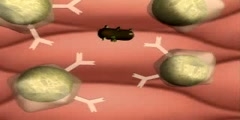
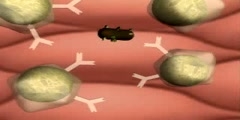
Specific immunity, also known as adaptive immunity or acquired immunity active or passive, normally comes into play when innate or non-specific immunity can't handle the problem. This form of immunity is a more recent evolutionary development than innate and is distinguished by its specificity for an invading organism and for its ability to remember (anamnesis) an encounter so that the second time the same organism or invader is encountered a more rapid and intense response can occur. There are two types of specific immune responses; humoral and cell mediated. Humoral immunity is mediated by B Lymphocytes that produce antibodies (IgG, IgM, IgA, IgE) and is especially important in combating acute bacterial infections. Cellular immunity is mediated by T Lymphocytes which are processed in the thymus. Cellular immunity is especially important in combating intracellular organisms such as TB, performing tumor surveillance, mediating transplant rejection, and fighting fungal and viral infections. It also mediates the delayed type hypersensitivity reaction, which underpins skin test like the one to assess for TB exposure. T Lymphocytes are classified according to surface receptors: for example, T-helper/inducer (CD4/Cluster designation 4) and T-suppressor/cytotoxic (CD8). Further, CD4 is found to have forms: Th1 and Th2. These each produce different cytokines which can influence the clinical manifestations of any immune response (Murasko & Bernstein, 1999; Sandmand, et al., 2002). The Th1 is associated with production of Interferon 2 (IL-2) and Interferon-Gamma (IL-) and may have a greater role in T cell proliferation and inflammation while the Th2 is associated with the production of IL-4, 5, 6 & 10 and may be more involved in B cell development and proliferation. The cytotoxic cells may also have similar subforms (Sandmand, et al., 2002).
Channels: Scientific Animations Cell Biology Microbiology Molecular Biology Medical
Tags: specific immunity humoral adaptive microorganisms
Uploaded by: tubeman ( Send Message ) on 06-04-2007.
Duration: 1m 21s